
Discover the financial pros and cons of hiring vs buying machinery in Australia. Learn how to choose the best option for your business needs, cash flow, and compliance.
Key takeaways
- Hiring offers flexibility: Ideal for short-term projects, seasonal peaks, or when trialling equipment before committing to a purchase.
- Buying builds long-term value: Suitable when you need frequent or ongoing machinery use, especially if it appreciates operationally or through resale.
- Machinery choice depends on usage: Hire high-cost, specialised, or intermittent-use equipment like earthmovers and access gear to save on capital and maintenance. Buy frequently used, core assets such as forklifts, agricultural machinery, and manufacturing equipment to maximise long-term value and control.
- Cash flow and tax impact differ: Hiring reduces upfront cost but offers no asset depreciation. Buying enables capital asset deductions and GST credits.
- Maintenance and downtime risks vary: Hired machinery usually includes maintenance. Ownership shifts servicing responsibility and downtime costs to you.
- Regulatory compliance is shared or self-managed: Hiring often ensures machinery meets safety standards. Ownership demands you stay across ever-changing regulations.
- Insurance varies by option: Hire includes basic cover but still carries liability; buying needs full insurance from day one.
- Legal risks need due diligence: Hire contracts and ownership both carry compliance and liability obligations, check terms and titles carefully.
- Australian examples show mixed success: Many civil contractors hire to scale quickly, while manufacturing and agri-businesses often buy to maximise long-term ROI.

Compare quotes from expert Australian suppliers and make the best choice. It's free, quick and easy!
Introduction: Why the choice matters more than ever
For Australian businesses operating in industries like construction, manufacturing, agriculture, or logistics, machinery isn’t just a tool, it’s a critical asset that drives operations and productivity.
But with machinery costs rising and project scopes evolving, many business owners face a tough question: should you hire or buy?
In today’s volatile market, this decision has deep financial implications. It can impact your cash flow, asset value, project flexibility, and tax obligations. And with equipment hire revenue in Australia hitting over $11 billion annually (IBISWorld, 2025), you're certainly not alone in considering the pros and cons.
This article walks you through the key decision points to help you make an informed financial analysis tailored to your specific business needs.
Project length and machinery usage
The first question is: how long will you need the equipment, and how intensively?
Hire makes sense if:
- Your project is short-term, seasonal, or one-off.
- You’re not sure if you’ll use the same equipment again soon.
- You want to trial a new machine or technology without committing.
Buy is better when:
- You use the same equipment frequently or daily.
- The machinery becomes integral to your operation.
- You want to customise or modify the equipment over time.
Example: A Queensland-based civil engineering firm hired an excavator fleet during a six-month mining infrastructure contract. Once the contract ended, they simply returned the machines, no storage, resale, or asset management issues.
Compare that with a WA grain farm that invested in its own seed drills, knowing they’d use them for over a decade across every harvest season.
Hiring vs buying: What machinery suits each option?
Deciding whether to hire or buy machinery often depends on the type of equipment and how your business uses it. Here’s a practical breakdown of common Australian industrial machines and when hiring or buying makes more financial and operational sense.
Machinery typically better to hire
- Earthmoving equipment (e.g., excavators, bulldozers, skid steers)
- These machines are expensive to own and maintain, and demand can fluctuate significantly with project cycles. Hiring is ideal for short-term projects, seasonal spikes, or when specialised attachments are needed temporarily. For example, civil contractors often hire excavators for specific roadworks contracts, avoiding storage and depreciation costs between jobs.
- Access equipment (e.g., cherry pickers, scissor lifts, boom lifts)
- Used intermittently on construction sites or maintenance projects, access gear is often best hired. Hiring gives you access to the latest safety-certified models without the burden of compliance management or costly servicing during idle periods.
- Specialised or niche machinery (e.g., concrete pumps, trenchers, directional drills)
- If your work requires highly specialised machines sporadically, hiring prevents costly capital tie-up and the hassle of storage, servicing, and resale when not in use.
Machinery typically better to buy
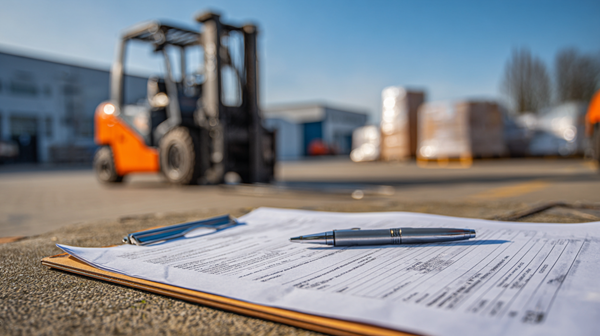
- Forklifts and material handling equipment
- These are core assets in warehouses and manufacturing plants used daily. Owning forklifts offers control over maintenance schedules, customisation options, and long-term cost savings compared to frequent hire fees.
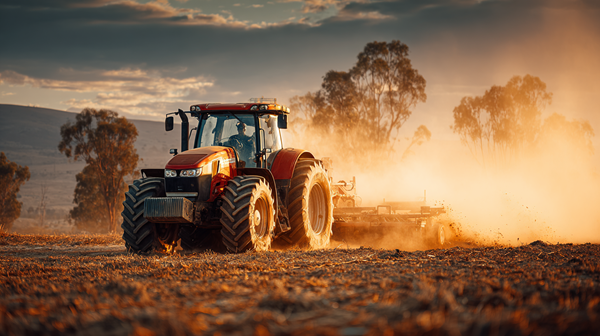
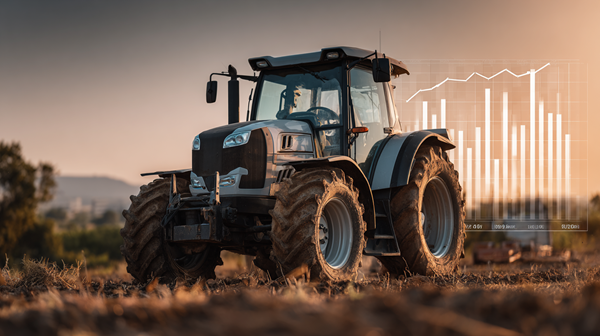
- Agricultural machinery (e.g., tractors, seed drills, harvesters)
- Farming businesses usually benefit from owning their key machinery because of seasonal but regular use across many years. Ownership supports customised setups and ensures availability during critical periods.
- Manufacturing equipment (e.g., CNC machines, presses, assembly line robots)
- Highly specialised manufacturing machinery tends to be a long-term investment integrated tightly with production workflows. Ownership allows for modifications, reliability, and financial benefits like depreciation and tax deductions.
Cost comparison: Upfront, ongoing, and long-term
It’s not just about purchase price versus rental fee, you need to weigh total cost of ownership (TCO) against total hire costs over time.
Upfront costs
- Hire: Lower upfront. You often only need to pay a deposit and initial rental fee.
- Buy: High initial outlay, often requiring finance (e.g. chattel mortgage or equipment loan).
Ongoing costs
- Hire: Includes maintenance, insurance, and possibly transport.
- Buy: You’ll need to budget for servicing, fuel, downtime, and insurance.
Long-term financial impact
- Hire: You don’t own the asset, so you can’t claim depreciation.
- Buy: Equipment can be depreciated under ATO rules (including temporary full expensing until 30 June 2025 for eligible SMEs).
Real-world scenario: If you hire a skid steer loader at $1,000 per week for 40 weeks/year, that’s $40,000/year. But if you buy one for $85,000 and depreciate it over 5 years, your effective annual cost may be lower after accounting for tax deductions and resale value.
Compare quotes from expert Australian suppliers and make the best choice. It's free, quick and easy!
Financing and tax implications
Buying opens more financing and tax strategy options than hiring. But it also locks up capital.
Hiring
- Treated as an operating expense.
- Fully deductible from taxable income as a business cost.
- Doesn’t affect your balance sheet (no asset/liability recorded).
Buying
- May qualify for GST credit on purchase price.
- Asset appears on your books and affects debt ratios.
- You may access chattel mortgage, equipment loan, or lease-to-own finance structures.
- Claim depreciation and interest as deductions.
Tip: Speak to your accountant about how temporary full expensing or instant asset write-offs apply to your business before 30 June 2025.
Maintenance, downtime, and support
One of the often-overlooked areas is who wears the risk of maintenance or unexpected breakdowns.
With hired machinery:
- Most reputable Australian hire companies include servicing in their contracts.
- If a machine fails, it’s usually replaced quickly, reducing your downtime risk.
- It’s ideal for businesses without in-house maintenance teams.
With owned machinery:
- You’re responsible for all maintenance, inspections, and repairs.
- Unexpected breakdowns can mean idle teams and project delays.
- You’ll need to develop a maintenance schedule and possibly carry spare parts.
Example: A NSW landscaping company that bought their own mini-excavator faced $6,000 in unexpected repair costs during the first year, whereas their hired machinery had always been swapped out within 24 hours when issues arose.
Compliance and regulatory obligations
Australia’s safety and environmental regulations for machinery are strict, and changing.
Hire advantages:
- Hire companies often maintain machinery to meet AS/NZS safety standards, reducing compliance burden.
- You get access to modern, compliant equipment with necessary documentation.
Buying considerations:
- You’re responsible for compliance under WHS laws, including safe operation, risk assessments, maintenance logs, and operator training.
- You must ensure equipment meets the relevant standards (e.g. AS 1418 for cranes, AS 2550 for earthmoving).
Case in point: A Melbourne construction company was fined $30,000 after failing to update safety features on a crane it owned, something typically managed automatically in a hire agreement.
Insurance and liability considerations
Whether you're hiring or buying machinery, insurance is non-negotiable, but how it’s structured and who holds liability can vary significantly.
Hiring: What's typically covered
Most reputable Australian hire companies include basic insurance or damage waivers in their contracts, but these rarely cover everything.
Key points to check:
- Inclusions and exclusions: Damage caused by operator error, negligence, or use outside agreed conditions may not be covered.
- Liability for theft or vandalism: You may still be responsible if equipment isn’t secured according to terms.
- Downtime clauses: If you damage a machine and it can’t be hired out to others, you could be charged loss of hire fees.
Some companies offer optional accidental damage protection at an extra cost, worth considering for higher-risk environments like civil sites or remote areas.
Buying: Full risk, full responsibility
Once you own the equipment, the insurance burden shifts entirely to you. You’ll need to organise:
- Comprehensive machinery insurance: Covers damage, theft, fire, flood, and sometimes business interruption.
- Public liability cover: In case machinery use causes third-party injury or damage.
- Downtime or revenue protection insurance: To cover project delays from machinery failure (especially valuable in owner-operator businesses).
Tip: Always notify your insurer when you modify or transport machinery, some policies won’t cover unapproved attachments or interstate movements.
Example: A NSW concreting company learned the hard way when their newly purchased skid steer was stolen from an unsecured site. Because they hadn’t updated their insurer on the new acquisition, the claim was denied, costing them over $40,000 out of pocket.
Legal considerations for ownership or hire
Beyond financial and operational issues, machinery decisions can expose your business to legal risk if contracts or responsibilities aren't clearly understood.
For hire agreements:
Hire contracts in Australia are legally binding commercial agreements, and you’re expected to adhere to specific conditions.
Watch for:
- Contract length and auto-renewal clauses: Many hire agreements roll over unless cancelled in writing.
- Damage and maintenance clauses: You're usually responsible for routine inspections, safe use, and reporting faults, even if maintenance is handled by the hire company.
- Return conditions: Excessive wear or late returns can result in hefty penalties or repair fees.
- Operator qualifications: Ensure your team has appropriate licences and VOCs (Verification of Competency). You can still be held liable for misuse.
Pro tip: Always request a full copy of the Hire Terms & Conditions, and ensure it’s reviewed by your legal advisor for contracts over a certain value threshold.
For owned equipment:
When you buy machinery, you're legally responsible for:
- Registration (if applicable): For certain on-road or towable equipment (e.g. trailers, cranes, or road rollers), registration through your state’s transport authority may be required.
- WHS compliance and safe operation: Under the Model WHS Regulations enforced in most states, you must ensure machinery is regularly inspected, operated safely, and that risks are documented and mitigated.
- Proof of ownership and transfer: Especially important if buying via auction or second-hand. Always ensure the seller has clear title and no outstanding finance.
Flexibility and scalability
Your business’s ability to adapt quickly can be shaped by whether your machinery is owned or hired.
Hiring is more flexible when:
- You win a new project and need immediate access to new equipment types.
- Your project scope changes suddenly (e.g. needing larger capacity machinery).
- You want to avoid asset disposal or upgrade costs.
Buying suits stable, predictable usage:
- When you’re confident in long-term demand for the machine.
- If you need custom specifications or attachments not available through hire.
Realistic scenario: A Brisbane civil contractor scaled up quickly for a government roadworks project using hired gear. Once the project wrapped, they returned the equipment without asset disposal headaches. In contrast, a regional quarry owner needed bespoke crushers and conveyors built to spec, buying was their only viable option.
Asset value and resale
While hire is purely a cost, buying machinery can create asset value, especially if well-maintained and with strong resale demand.
- Machinery like bulldozers, excavators, and harvesters retain decent resale value in the Australian used market.
- Buying enables you to reinvest resale proceeds into newer or upgraded equipment down the line.
But:
- Older machinery may become harder to sell due to emissions standards or tech obsolescence.
- Transport, auction fees, and buyer availability can impact the resale process.
Emerging trends: How the market is shifting
The Australian machinery landscape is evolving.
- Hire demand is growing, especially for earthmoving and access equipment in civil construction.
- Tech-enabled machines (e.g. GPS-guided graders, smart sensors) are expensive to buy outright, prompting more hires.
- Carbon-neutral projects are increasing demand for electric and low-emission gear, often more accessible via short-term hire.
- Regional businesses, especially in mining and agriculture, are still more likely to buy for control, availability, and ROI.
Conclusion: What’s right for your business?
Hiring and buying machinery both offer distinct financial advantages, depending on how you operate.
Ask yourself:
- How long and how often will I use this machine?
- Do I want to maintain and manage it myself?
- How quickly do I need it, and how specific is the application?
- Can my cash flow handle a large upfront purchase?
- What tax benefits or financing options are available to me?
In many cases, a hybrid approach works best. Hire for short-term projects or specialised jobs, and buy for core equipment you rely on daily.
Before making the call, run the numbers with your accountant or finance broker. Consider total costs, downtime risks, tax position, and growth plans. The right decision could save your business tens of thousands, while ensuring you have the right tools at the right time.