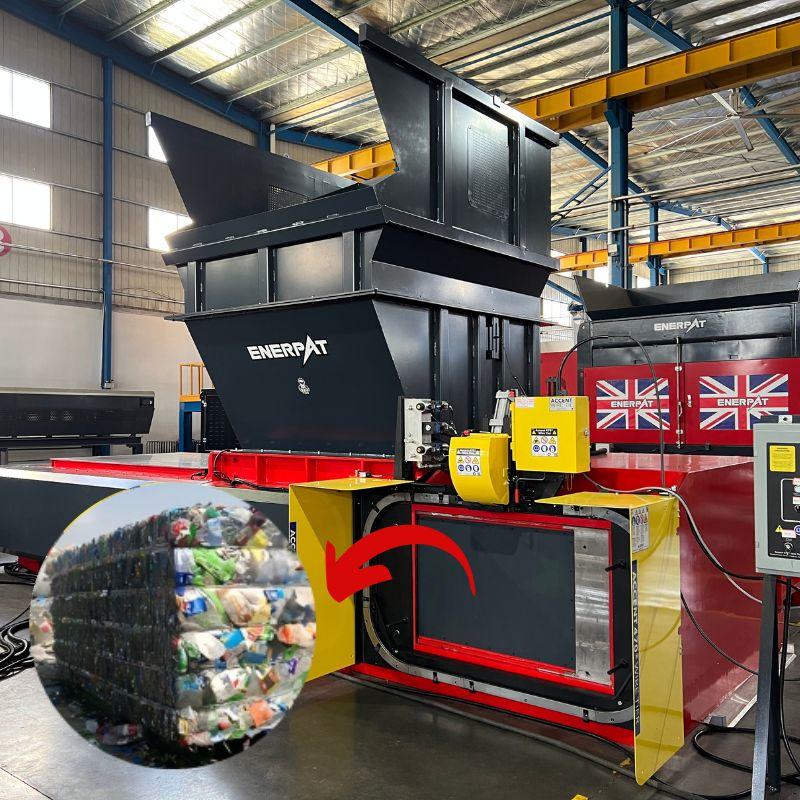
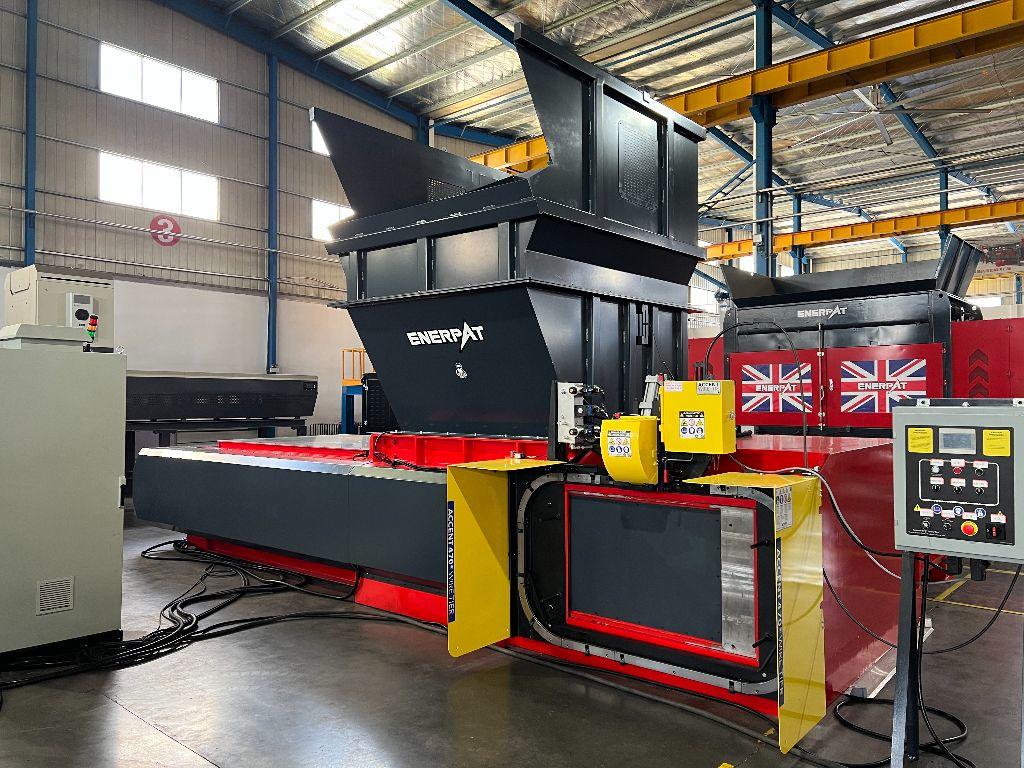
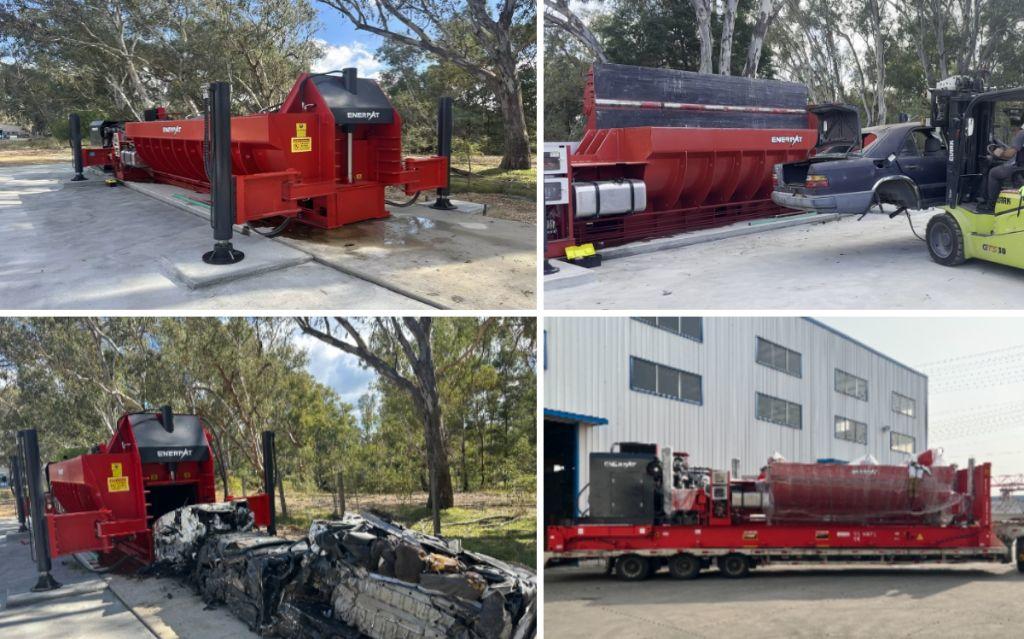
The Enerpat SCE Series heavy-duty balers are purpose-built for Australian auto recycling and scrap metal processing yards, designed to compact end-of-life car bodies and light scrap metal into dense, uniform bales. This industrial baler drastically reduces material volume, cuts logistics and storage costs, and maximises scrap metal resale value for recycling businesses. Two core models are available to suit different production scale demands: the SCE5000 and the extended SCE5250.
SCE5000: Fitted with a 5000×2000mm compression chamber, ideal for standard car body recycling and medium-volume scrap processing
SCE5250: Upgraded with an extended 5250mm compression chamber for larger batches and oversized vehicle shell processing
The series comes with a Cummins diesel engine as standard (electric motor is available on custom request). Full customisation is supported, including equipment paint colour and functional configurations, to match your on-site operational requirements and plant aesthetics.
Applicable Materials
Engineered for versatile recycling applications, suitable for the following materials widely processed in Australian scrap yards:
Primary Material: Stripped car bodies within 5 metres (seats, dashboards and airbags can be retained without pre-removal, saving pre-processing labour)
Extended Material: Light-gauge scrap metal below 3mm, including aluminium profiles, copper tubes, iron sheets, color steel tiles, and waste appliance casings
Product Construction
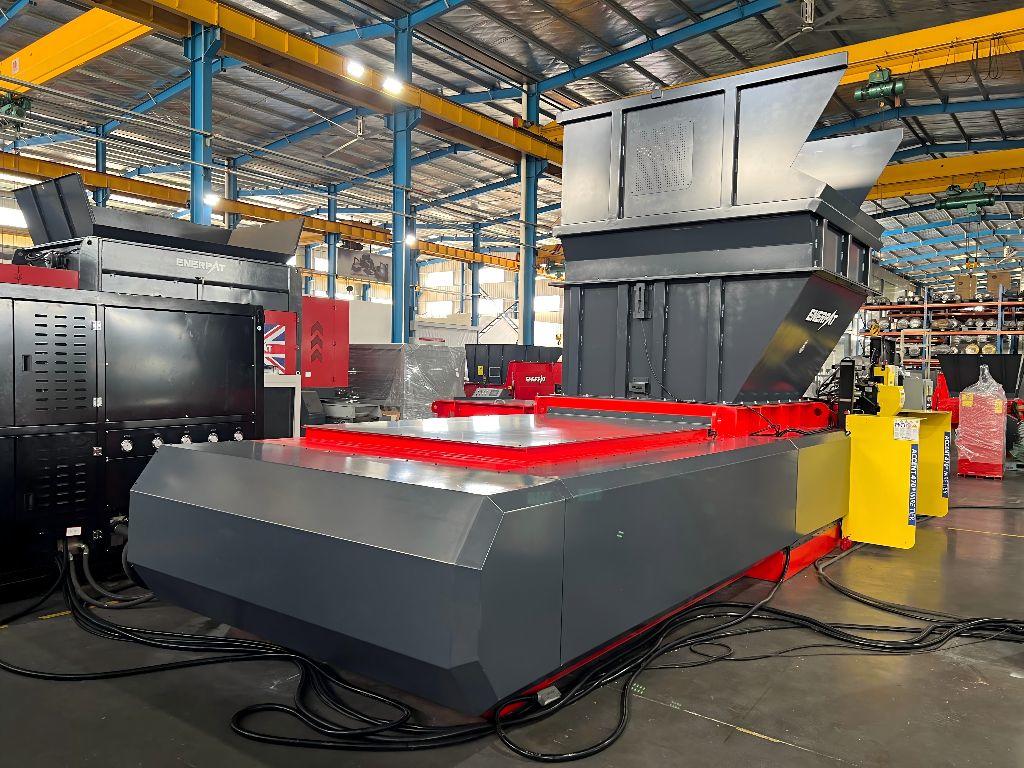
The robust integrated structure ensures stable long-term operation in harsh industrial environments. Complete machine components include: heavy-duty base frame, high-pressure compression chamber, dual-door locking mechanism, automatic bale discharge system, main compression cylinder assembly, power system, full hydraulic system and intelligent electrical control system.
Key Advantages | Why Choose Enerpat Over Competitors
Tailored for high-intensity Australian recycling operations, the SCE series outperforms ordinary balers in durability, power and productivity with industry-leading configurations:
Superior Compression & Shaping Force: Equipped with a dual-stage door structure and 6 hydraulic cylinders for integrated shaping and compression. Most peer balers only adopt 4 cylinders, resulting in insufficient compaction density and unstable bale shaping. Our upgraded cylinder configuration delivers stronger, more uniform compression for tighter bales.
Premium Cummins 6-Cylinder Power System: Fitted with world-class Cummins 6-cylinder diesel engines, providing stable, high power output with no black smoke during high-load operation. Competitors commonly use 4-cylinder engines or Iveco engines, which suffer from insufficient power, weak compression performance and poor durability under continuous heavy-duty work.
High-Grade Wear-Resistant Steel: Lined with Swedish Hardox 500 wear plates for exceptional abrasion resistance and extended service life. Most market rivals only use Hardox 400/450 plates, which wear out faster and require frequent replacement in daily recycling work.
Heavier Machine Body & Higher Productivity: The total machine weight reaches 32 tonnes, far exceeding 21–22 tonnes of ordinary peer equipment. The heavy-duty frame ensures anti-vibration stability and long-term structural integrity. Stable actual output: 10–12 cars per hour (including feeding time), equivalent to 15–20 tonnes of scrap metal per hour, delivering higher ROI for recycling enterprises.
Core Benefits for Australian Recyclers
Maximise bale density to reduce transport and warehouse occupation costs
Minimal pre-processing requirements to save labour and improve operational efficiency
Heavy-duty, wear-resistant design lowers maintenance frequency and replacement costs
- Customisable configuration adapts to small, medium and large recycling yard operations
- Local Australian Site Reference Available: We have fully operational Enerpat car balers running perfectly at customer sites across Australia. On-site inspections are welcome anytime for you to verify the machine’s real performance, stability and output on local working conditions.?


.jpg)
.jpg)
.jpg)
.jpg)
.jpg)
.jpg)
.jpg)
(1).jpg)
.jpg)
(1).jpg)
.jpg)
(1).jpg)

 Reach valuable industrial buyers in minutes
 Promote key products & content
 Drive cost effective & measurable sales
.jpg)
.jpg)
.jpg)
.jpg)